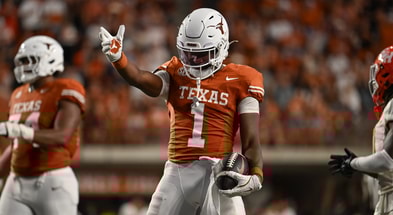
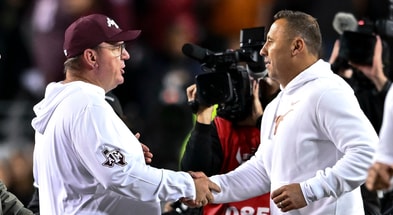
The buyout for the Texas State game is only $1.4 million, but there are endless reasons why Texas isn't canceling that game

Texas Tech board of regents chairman Cody Campbell offered to have the Red Raiders pay the buyout necessary for the Texas Longhorns to get out of their week one game with Texas State and play Tech in either Lubbock or at AT&T Stadium in Arlington. If Texas shockingly decides to agree to that game one week before hosting Ohio State in a top-5 matchup, how large of a check would TTU athletics director Kirby Hocutt need to write?
[Sign up for Inside Texas and get 50% off Premium Access!]
According to documents obtained by Inside Texas, the game contract for the matchup between the Longhorns and Bobcats stipulates Texas owes Texas State $1.4 million whether the game happens or not. But Texas Tech wouldn’t want to send tens of millions of more dollars to UT and other related entities they’d need to make whole in order to get the Horns to play a different game in week one, nor do UT and those other entities have any desire to listen to the offer.
The original game contract, signed by Texas and Texas State administrators in 2019, is a standard buy-game contract for a home Longhorn football game. That means there are two provisions in the contract, among many available elsewhere for Texas, that will keep the Bobcats on the schedule and keep the Longhorns in Austin during week one.
In Article V, section A of the game contract, it states “the Host Institution will retain all gate receipts,” which is again standard fare for these types of documents.
Then in Article IX, section A, paragraph 1, the contract says “the Host Institution’s conference own and retain all television, pay per view, satellite, cable, Internet, and other rights to tape, broadcast, rebroadcast, and otherwise distribute, license, exhibit, sublicense, televise, transmit, or retransmit the Game, in whole or in part, live or delayed, throughout the universe by any and all means, uses, and media now known or hereafter developed.”
Regarding the first stipulation, Texas would lose out on significant dollars via the “gate.” The Longhorns lamented playing only six home games last year and raised ticket prices this year with a seventh game on the schedule. To play only six home games, and to also remove one of the least challenging opponents from a difficult schedule and replace them with an ostensible College Football Playoff contender, is bad for actual business and the business of trying to make the CFP for the first time since 2024. According to Knight-Newhouse data, Texas’ athletic department made almost $61 million in ticket sales in 2024. To think Texas would forfeit an opportunity for revenue in the era of paying players is without any real foundation in reality.
The second stipulation hits home, too. By virtue of this contest being a home game for the Longhorns, it is under the purview of ESPN as a result of the Southeastern Conference’s media rights deal with ESPN. Texas and Texas State are scheduled to kick off the season on September 5 at 2:30 on ESPN. Even with a season-opening non-conference game, the Longhorns are valuable property for ESPN. Texas’ 11 a.m. game versus San Jose State in week two of last season logged 3.75 million viewers per Sports Media Watch, good for the fourth most pairs of eyes on the weekend. There is no way anyone in Austin, the SEC office, or at ESPN will allow for a game that was scheduled to be on ESPN airwaves to be taken to a direct competitor in Fox.
- 1
 New
NewCollege baseball transfer portal intel: Arkansas trending & more
- 2

Why college sports leaders are pushing collective bargaining
- 3

Recruiting Visitor Preview: Texas, UGA & more host big weekends
- 4

Is a 'Super League' coming to college sports?
- 5

Utah intel: Morgan Scalley talks state of Utes' roster
Get the On3 Top 10 Newsletter in your inbox every morning
By clicking "Subscribe to Newsletter", I agree to On3's Privacy Notice, Terms, and use of my personal information described therein.
Speaking of Fox, there would likely be a loud bit of displeasure from that network if Tech and the Big 12 somehow acquiesced to that game not being a “Big 12 broadcast.” If Big Noon Kickoff had known the potential for Texas at Texas Tech was available, then there’s little doubt that game would have been picked instead of the actual choice of North Texas at Indiana. These things can change, but they are very hard to change less than 100 days away from an event no matter how much the Lubbock contingent wants it to change.
Especially when there are multiple entities on one side of the conversation that have no interest in making the change.
All in all, it wouldn’t cost Texas Tech that much to buy out Texas State. Inside Texas requested how much it would cost Texas Tech to buy out the Abilene Christian game, but those numbers were not available at time of publication. Texas State probably wants to play Texas, and ACU said it wants to play Texas Tech. The Wildcats released a statement last week that they are “planning on playing Texas Tech as scheduled on Sept. 5 in Lubbock.”
It doesn’t matter anyway. Though Campbell and Hocutt may want to write a check, the Longhorns don’t want anything to do with making a schedule already considered the most difficult even tougher, nor will they give up a home game, nor will they address the counterpunch thrown from West Texas in what was a brief May war or words between Texas and Texas Tech.